
Pistachio
View Products
Frozen Drieds
View Products
Dried Vegetables
View Products
Raisin
View Products
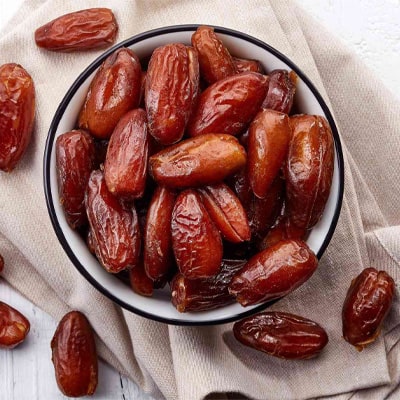
Dates
View Products
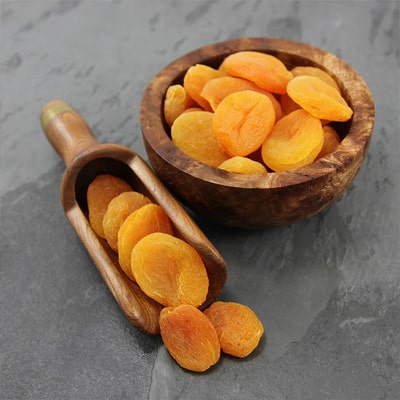
Dried Apricot
View Products
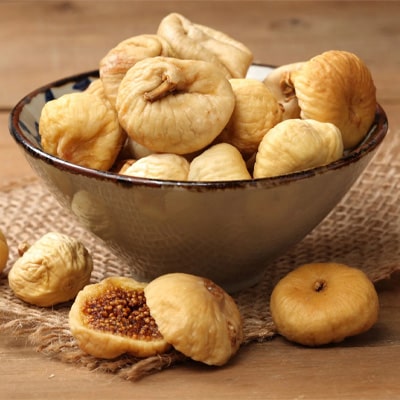
Figs
View Products

Saffron
View Products
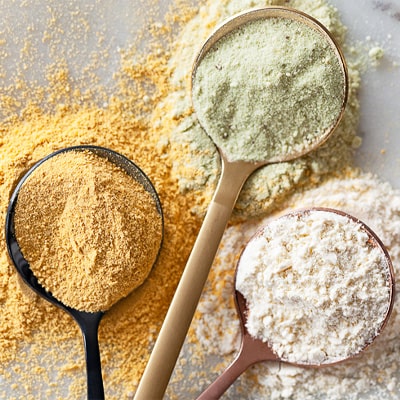
Powders
View Products
Dried Fruits
View Products
View Products
View Products
View Products
View Products
View Products
View Products
View Products
View Products
View Products
View Products
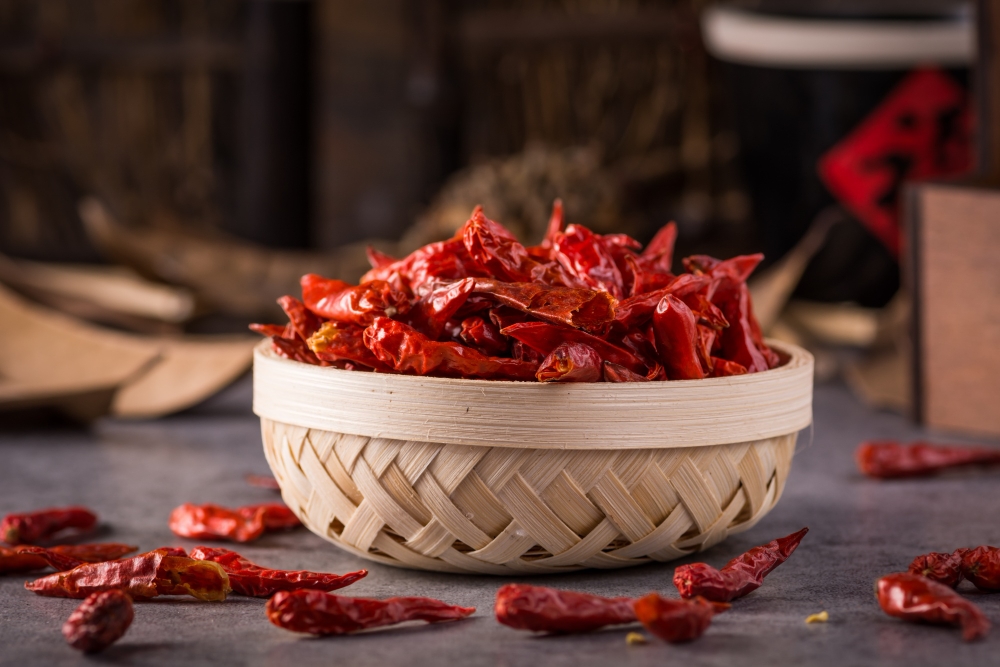
Iranian dried paprika, as one of the key dried vegetables, has emerged as a valuable spice in both culinary and industrial markets worldwide. Known for its intense red color, distinctive aroma, and diverse flavor profiles, it is widely used in traditional Iranian dishes as well as international food production. For bulk buyers, distributors, and food processors, understanding the varieties, quality factors, pricing, and export opportunities of Iranian dried paprika is essential for strategic sourcing.
Iran produces several dried paprika varieties, each catering to specific culinary needs:
Sweet Dried Paprika – Mild in taste with a bright red color, ideal for adding visual appeal without spiciness.
Hot Dried Paprika – Offers bold heat and flavor, commonly used in sauces, marinades, and spicy dishes.
Smoked Dried Paprika – Slowly dried over wood smoke, producing a deep, smoky flavor popular in gourmet recipes.
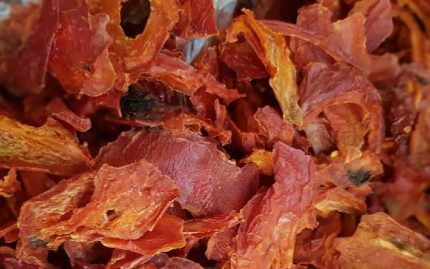
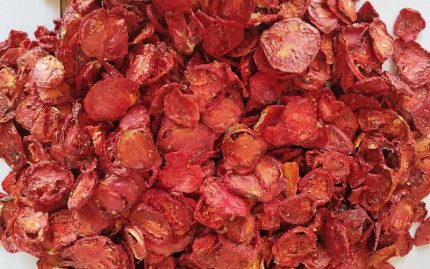
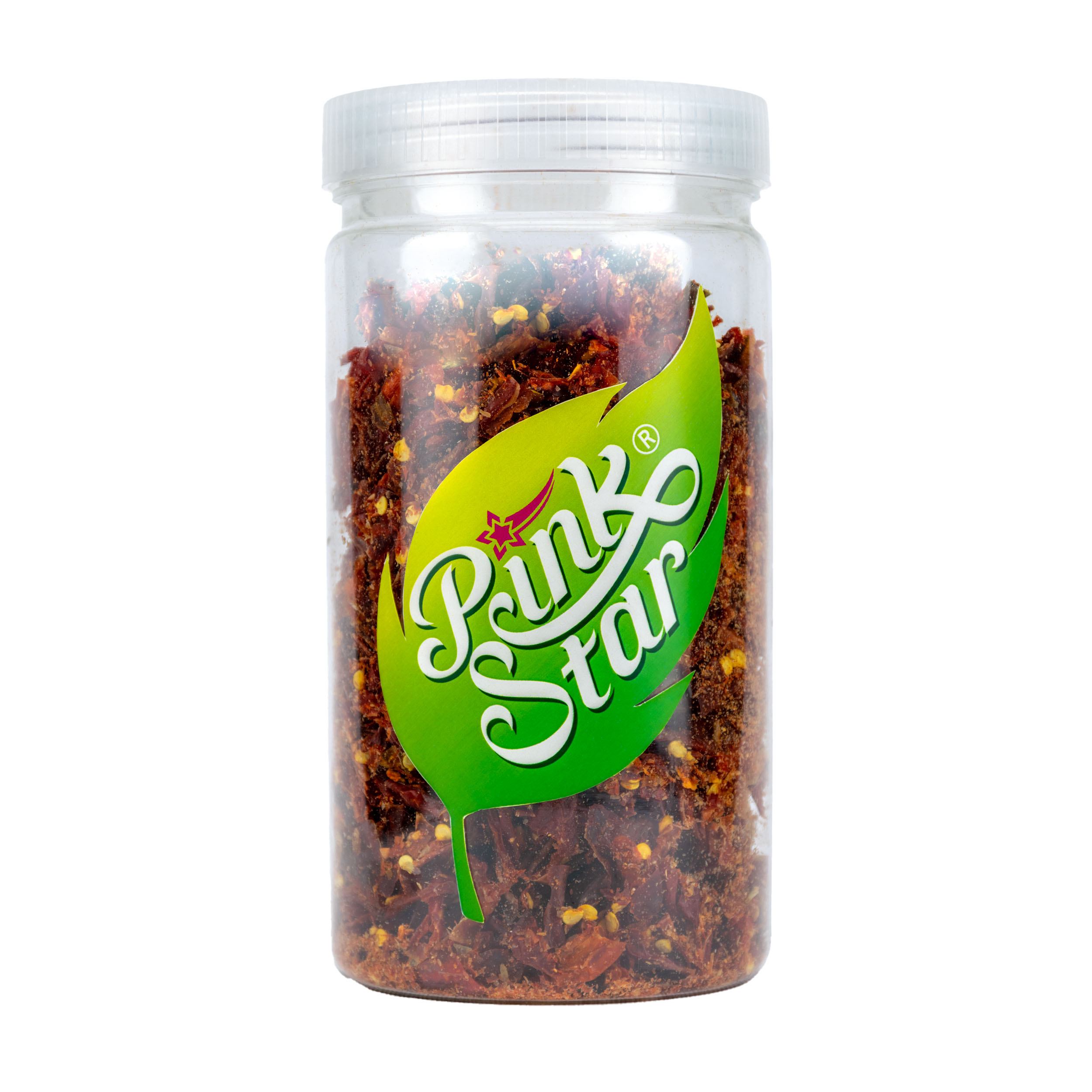
Iranian dried paprika is available in multiple formats such as whole pods, flakes, granules, and fine powder, offering flexibility for both retail packaging and industrial applications.
The ideal choice depends on target markets and product applications:
Sweet and Smoked Dried Paprika are particularly attractive for European markets.
Hot Dried Paprika is in high demand across the Middle East and Asia.
Premium-quality dried paprika is defined by:
Uniform bright color
Low moisture levels
Free from impurities or foreign particles
Export-ready products often carry certifications such as ISO, HACCP, and Organic Standards, which strengthen credibility and simplify international trade. Reliable suppliers should ensure consistent quality and full traceability across their production processes.
Pricing varies by variety, grade, and certifications.
In Iran, bulk dried paprika typically ranges from $4 to $10 per kilogram depending on quality.
Export prices factor in packaging, logistics, and compliance with destination market standards.
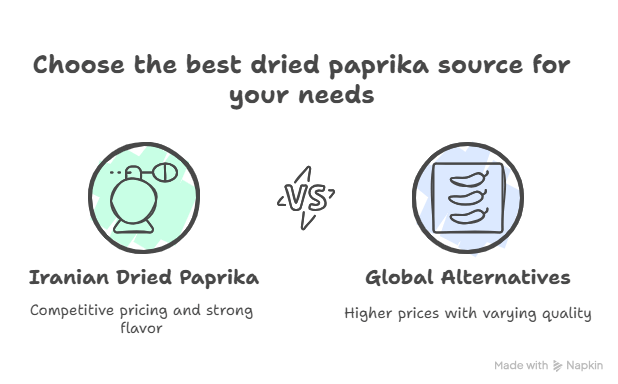
Compared to Hungarian or Spanish alternatives, Iranian dried paprika often delivers competitive pricing with strong flavor intensity, making it an attractive choice for global buyers.
The following factors play a crucial role in determining value:
Cultivation conditions – Soil quality, irrigation, and harvest timing affect flavor and color.
Drying methods – Sun-drying vs. mechanical drying influences aroma, shelf life, and overall quality.
Storage and packaging – Proper handling prevents contamination, moisture absorption, and quality loss.
Certifications and traceability – Enhance buyer trust and command premium pricing.
International buyers should consider:
Minimum Order Quantities (MOQs) – Often start from one ton.
Packaging options – From bulk sacks to vacuum-sealed bags for freshness.
Payment and delivery terms – Negotiated for smooth logistics.
Supplier credibility – Verified suppliers ensure consistent quality and long-term supply security.
Notable suppliers include Armanifood, Rezbon, Felexa, and Tridge. These brands are recognized for their export-standard products, offering uniformity, purity, and rich flavor. Importers can compare suppliers based on certifications, processing methods, and customer feedback to select the most suitable option.
Iranian dried paprika enjoys high demand across Europe, the Middle East, and Asia. Rising global recognition of Iranian spices is creating new opportunities for exporters. With cost advantages, diverse varieties, and consistently high quality, Iranian dried paprika positions itself as a competitive option for global distributors and food manufacturers.
Unique soil and climate conditions give Iranian dried paprika its vibrant color, strong aroma, and distinct flavor profiles, especially in sweet and smoked varieties.
When stored in a cool, dry environment, it retains quality for 12–18 months. Airtight or vacuum-sealed packaging extends shelf life further.
Yes. By working with certified suppliers and ensuring compliance with import regulations, bulk imports can be arranged smoothly and efficiently.




ahmed –
Is there a noticeable difference in taste between Iranian and Spanish paprika?
PAgy@58K21R –
Yes, Iranian paprika usually has a stronger flavor and a more vibrant red color, while Spanish paprika is generally milder. This makes Iranian paprika a better choice for dishes that require bold color and distinct taste.