Pistachio
View Products

Frozen Drieds
View Products
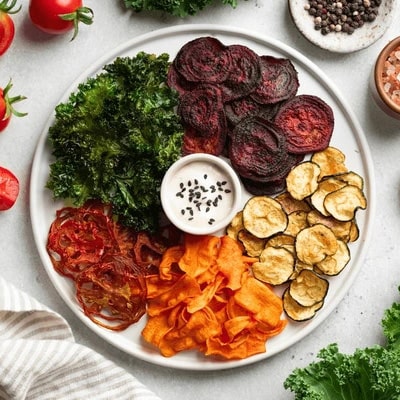
Dried Vegetables
View Products

Raisin
View Products
Dates
View Products

Dried Apricot
View Products
Figs
View Products

Saffron
View Products

Powders
View Products
Dried Fruits
View Products
What is the current price of dried vegetables in global trade, and why does it vary so much?
Prices range from about $1.30 to over $50 per kg depending on processing method (air-dried vs freeze-dried) and destination market, with export prices per ton ranging from roughly $700 to over $4,000 based on buyer country and quality grade.
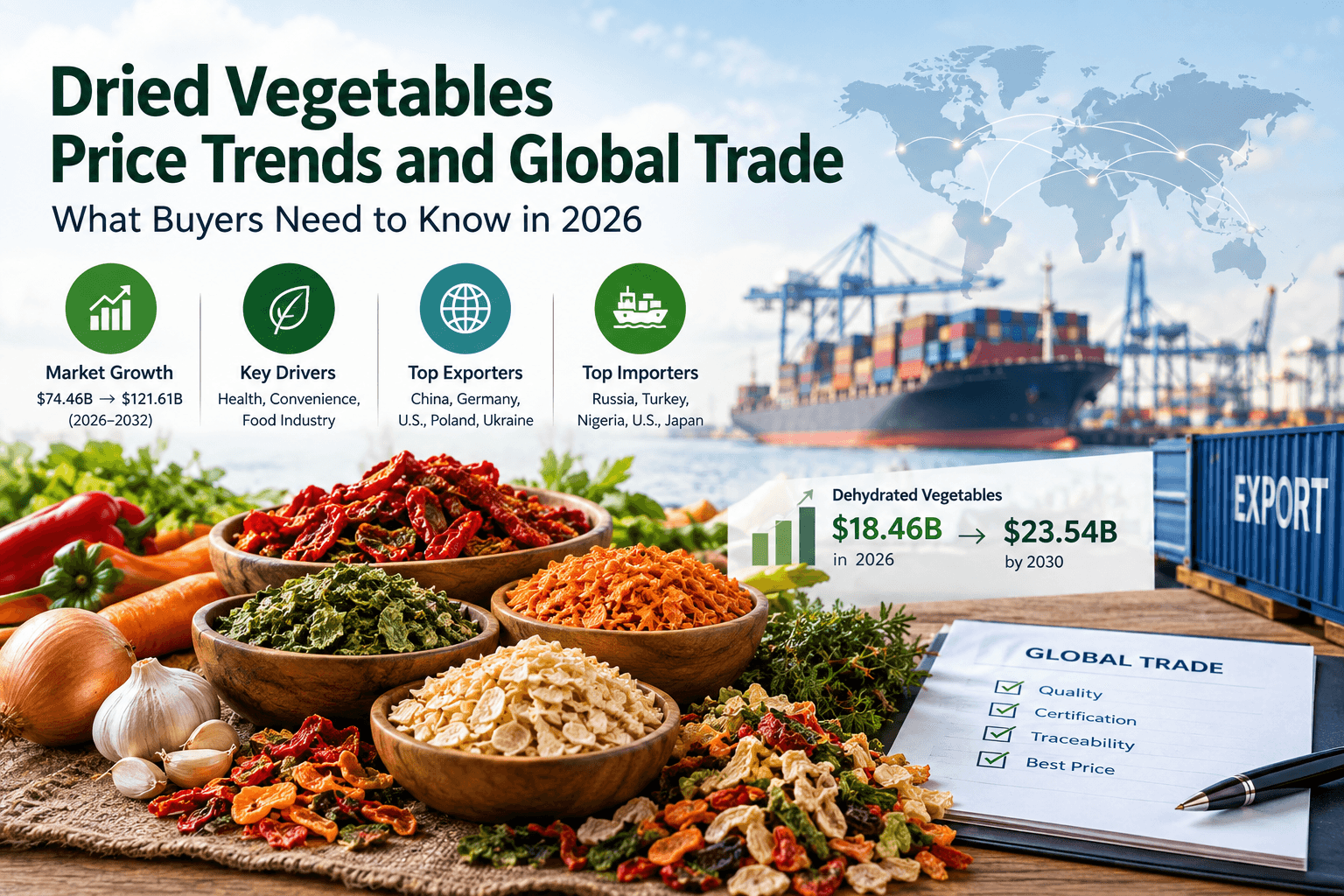
Global trade in dried vegetables has entered a period of real momentum, and the numbers back it up. The dried fruit and vegetable market reached roughly $74.46 billion in 2026 and is projected to climb to $121.61 billion by 2032, growing at an 8.4% compound annual rate.
Within that broader category, dehydrated vegetables alone were valued at $18.46 billion in 2026, expected to reach $23.54 billion by 2030. For importers, exporters, and procurement teams, these figures translate into a market worth watching closely, because pricing swings can significantly affect margins on bulk orders.
Shelf-stable nutrition is driving much of this growth. Consumers and foodservice buyers alike want ingredients that survive long transport routes without refrigeration, and dehydration delivers exactly that. Reduced water activity extends shelf life, cuts food waste, and lowers shipping weight, which matters enormously when freight costs eat into thin margins.
Fast food and packaged food production have become major demand drivers too. Dehydrated vegetables show up in seasoning blends, instant soups, sausages, pickles, and ready-to-eat meals, and that industrial demand isn’t slowing down. Add rising health consciousness, clean-label preferences, and growing interest in freeze-dried snacks, and you get sustained upward pressure on both volume and price.
Pricing varies dramatically depending on processing method and product grade. Bulk dried vegetables span a wide spectrum, from $1.30 to $4.00 per kilogram for commodity cuts like standard dried onion or garlic flakes, up to $13 to $50 or more per kilogram for premium freeze-dried supply. That gap exists because freeze-drying preserves nutrients and texture far better than simple air-drying, but it’s also far more energy-intensive and expensive to produce.
Export pricing tells a similarly volatile story. India’s dried vegetable export price hit $1,242 per ton in May 2023, then surged to $1,948 per ton by June 2024, an 18% jump in a single month. Destination matters just as much as origin. Shipments to the United States averaged $4,122 per ton, while the same product heading to Bangladesh sold for around $687 per ton. That’s not a small gap. It reflects differences in buyer purchasing power, quality specifications, and logistics costs baked into each trade lane.
China dominates dried vegetable exports by a wide margin. In 2023, China exported roughly $870.8 million worth of dried vegetables, more than five times the next closest competitor. Germany followed at $152.5 million, with the United States, Poland, and Ukraine rounding out the top exporters. On the import side, demand concentrates heavily in a handful of markets. Russia, Turkey, and Nigeria together account for the majority of certain dried vegetable import categories, while the United States, Japan, and Chile lead broader dehydrated vegetable imports.
This concentration matters for anyone sourcing product. A handful of countries controlling most of the supply means price shocks in one region ripple across the entire global market fast.
Several forces interact to push prices up or down, and understanding them helps buyers time purchases better.
Weather extremes and harvest yields directly affect input costs. A poor onion or tomato harvest in a major producing region tightens supply and pushes dehydrated versions higher within weeks.
Dehydration is an energy-hungry process. Whether producers use hot-air drying, vacuum drying, or freeze-drying, fuel and electricity prices feed straight into the final cost per kilogram.
Since most trade is priced in US dollars, currency swings in exporting countries can make products cheaper or more expensive overnight for foreign buyers, independent of actual production costs.
Recent US tariff actions have added a layer of unpredictability to sourcing decisions. Buyers now factor political risk into supplier selection almost as heavily as price and quality.
International shipping costs remain a critical variable, especially for buyers ordering full containers. Bulk orders reduce per-unit freight costs, but storage and handling fees at the destination can offset those savings if not planned carefully.
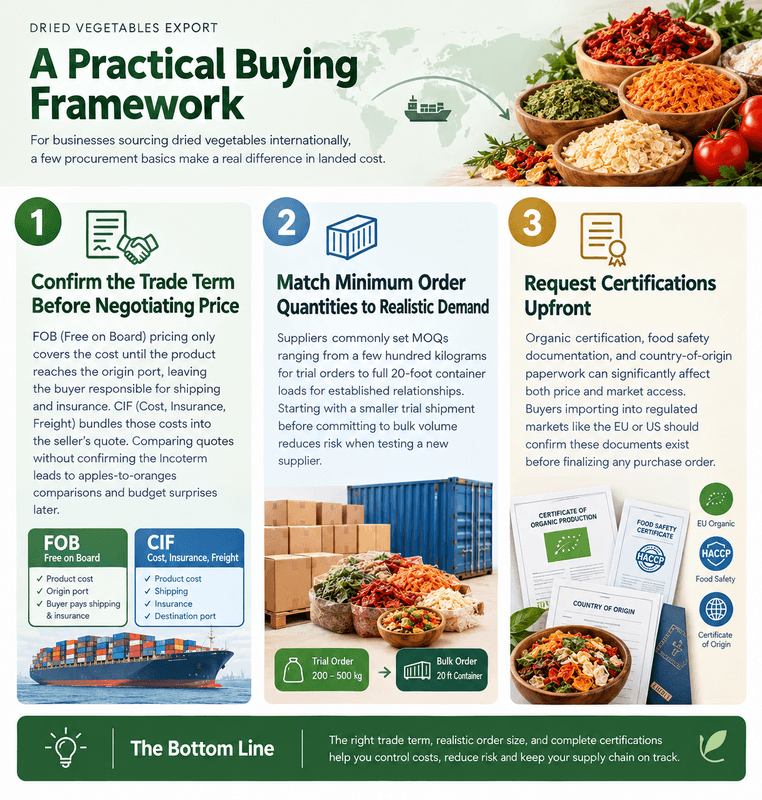
For businesses sourcing dried vegetables internationally, a few procurement basics make a real difference in landed cost.
FOB (Free on Board) pricing only covers the cost until the product reaches the origin port, leaving the buyer responsible for shipping and insurance. CIF (Cost, Insurance, Freight) bundles those costs into the seller’s quote. Comparing quotes without confirming the Incoterm leads to apples-to-oranges comparisons and budget surprises later.
Suppliers commonly set MOQs ranging from a few hundred kilograms for trial orders to full 20-foot container loads for established relationships. Starting with a smaller trial shipment before committing to bulk volume reduces risk when testing a new supplier.
Organic certification, food safety documentation, and country-of-origin paperwork can significantly affect both price and market access. Buyers importing into regulated markets like the EU or US should confirm these documents exist before finalizing any purchase order.
The freeze-dried vegetable segment is projected to grow from $20.43 billion in 2026 to $30.71 billion by 2032, a 6.9% annual growth rate, driven largely by supply chain optimization and rising demand for premium, high-quality shelf-stable products. Air-dried vegetables are expanding even faster, with an 8.9% CAGR forecast through 2033, reflecting continued consumer preference for naturally preserved food without added chemicals.
For buyers and traders, this growth trajectory signals a market that rewards early, informed positioning. Prices will likely keep climbing as demand from foodservice and packaged food manufacturers outpaces supply growth in premium categories, particularly freeze-dried products. Locking in reliable supplier relationships now, rather than waiting for further price increases, is a reasonable strategy for anyone planning meaningful import or export volume in this space.
Prices vary widely by product type and destination, generally ranging from roughly $700 to over $4,000 per ton depending on the vegetable, processing method, and importing country. Premium freeze-dried products command significantly higher prices than standard air-dried commodity cuts.
China leads global dried vegetable exports by a substantial margin, followed by Germany, the United States, Poland, and Ukraine. China’s dominance stems from large-scale production capacity and established export infrastructure.
The terms are often used interchangeably, but dehydration typically refers to industrial processes using controlled heat and airflow, while “dried” can also include freeze-drying or vacuum-drying methods. Freeze-dried vegetables retain more nutrients and rehydrate better, which is why they carry a much higher price per kilogram.
Buyer purchasing power, quality specifications, freight distance, and import regulations all factor into final pricing. A shipment to a high-income market with strict quality standards will typically command a much higher price than the same product sold to a lower-cost destination market.