
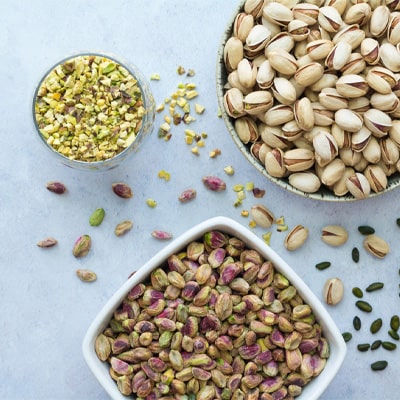
Pistachio
View Products
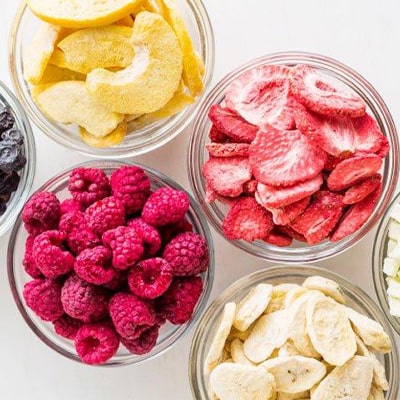
Frozen Drieds
View Products
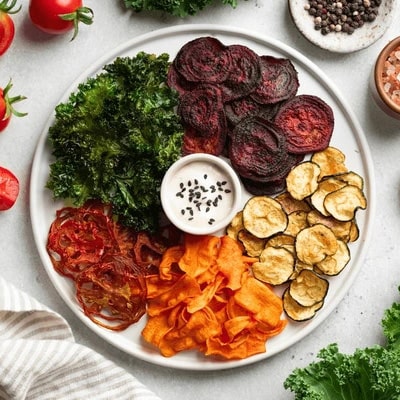
Dried Vegetables
View Products
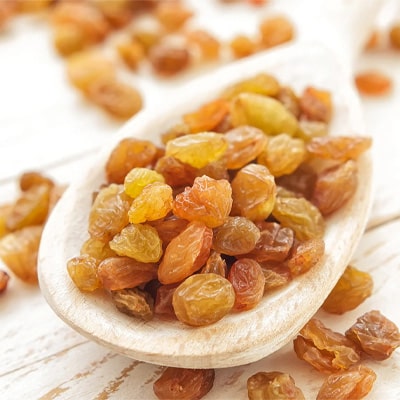
Raisin
View Products
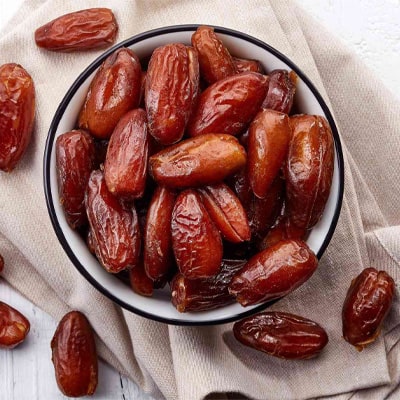
Dates
View Products
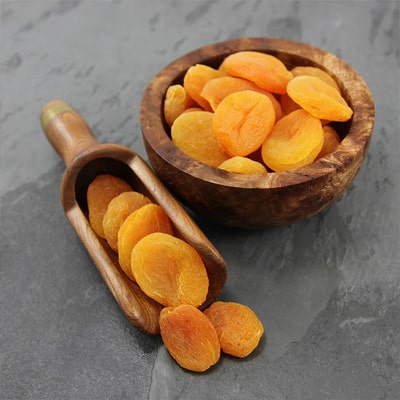
Dried Apricot
View Products
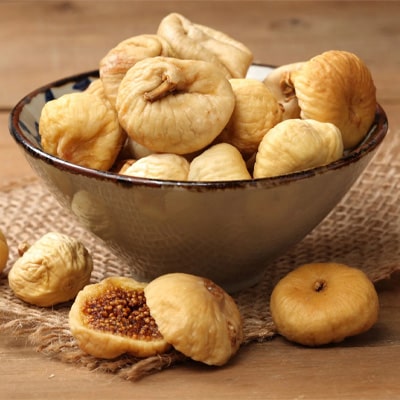
Figs
View Products

Saffron
View Products
Powders
View Products
Dried Fruits
View Products
View Products
View Products
View Products
View Products
View Products
View Products
View Products
View Products
View Products
View Products

Insight
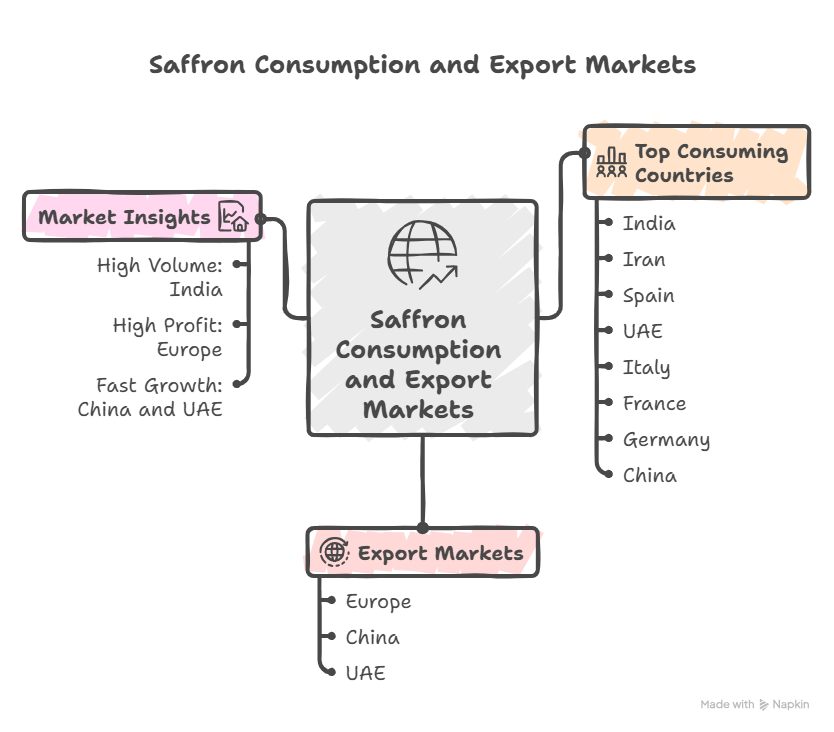
Saffron remains one of the most valuable agricultural commodities in global trade. Despite limited production, demand continues to expand across food, pharmaceutical, and luxury markets. This imbalance between supply and consumption creates one of the most profitable opportunities in the spice industry.
Understanding the top saffron consuming countries is essential for exporters, importers, and bulk buyers. It directly influences pricing, trade routes, and long term sourcing strategies. Countries with the highest consumption are often not the producers, but the most strategic import markets.
This guide explains where saffron is consumed the most, why these markets matter, and how global trade flows are structured in 2026.
| Country | Estimated Consumption (tons) | Role in Market | Import Dependency |
|---|---|---|---|
| India | 80–100 | Largest consumer | High |
| Iran | 60–80 | Producer + consumer | Low |
| Spain | 20–30 | Re-export hub | Medium |
| UAE | 15–25 | Luxury & re-export | High |
| Italy | 10–15 | Gourmet market | High |
| France | 8–12 | Premium food sector | High |
| Germany | 8–12 | Organic demand | High |
| China | 10–20 | Pharma growth | High |
| USA | 5–10 | Niche premium | High |
The global saffron market is highly concentrated on the supply side but widely distributed on the demand side.
Saffron prices vary significantly depending on quality and grading standards such as ISO 3632.
This price volatility makes consumption data even more critical for buyers and exporters.
Global saffron consumption is not evenly distributed. Cultural habits, cuisine traditions, and industrial demand shape each market differently.
India is the leading consumer with an estimated 80 to 100 tons annually. Demand is driven by culinary use, Ayurveda medicine, and religious ceremonies. Consumption remains stable even during price fluctuations, making India a high volume but price sensitive market.
Iran consumes approximately 60 to 80 tons annually. Although it is the largest producer, saffron is deeply embedded in local cuisine and traditional medicine.
Spain imports raw saffron, processes it, and redistributes it across Europe. It also maintains moderate domestic consumption in traditional dishes such as paella.
The UAE combines high per capita consumption with re export activity. Saffron is widely used in hospitality, gifting, and luxury retail.
Both countries represent high value consumption rather than high volume. Demand is driven by gourmet restaurants and fine dining industries.
Saudi Arabia maintains cultural demand, Germany is expanding in organic food sectors, and China is rapidly growing in pharmaceutical applications.
Europe is not the largest consumer in volume, but it is one of the most valuable markets globally.
Key European saffron consuming countries include:
Market drivers in Europe include:
European buyers prioritize quality, certification, and traceability over price alone. This makes it a high margin but competitive region.
Saffron consumption is closely linked to import dependency rather than production capacity.
This shows a key insight. The most important saffron markets are not always producing countries, but importing economies.
Understanding production helps explain global trade flow.
Production concentration creates dependency in global pricing and trade routes.
Global saffron trade is dominated by a few key exporters.
Most saffron passes through intermediaries before reaching final markets, increasing both cost and branding opportunities.
Saffron pricing is highly sensitive to quality grading and origin.
| Grade | Price Range per kg | Market Segment |
|---|---|---|
| Low Grade | 1500 to 2500 euros | Industrial use |
| Sargol | 2500 to 4000 euros | Retail export |
| Negin | 3500 to 6000 euros | Premium gourmet |
Price is influenced by harvest yield, certification, and international demand fluctuations.
For bulk buyers and exporters, market segmentation is essential.
High volume markets:
High value markets:
Fast growing markets:
Successful exporters typically combine volume markets with premium markets to balance stability and profit.
The top saffron consuming countries reveal more than just consumption data. They highlight global trade opportunities, pricing structures, and export strategies.
For exporters, the key is not only identifying where saffron is consumed, but understanding why those markets depend on imports. High volume countries ensure stability, while high value markets deliver stronger profit margins.
A balanced export strategy across both segments creates long term competitiveness in the global saffron industry.
India is the largest consumer due to its cultural, medicinal, and culinary applications.
India, UAE, Saudi Arabia, and several European countries are the main import-driven buyers.
Approximately 90 percent of saffron is produced in Iran.
Rising demand in gourmet food, wellness products, and pharmaceuticals is driving global growth.



This article explains the difference between high-volume and high-profit saffron markets very well. Many suppliers only discuss production but ignore actual consumer demand trends.
Thank you. Understanding consumption behavior and import dependency is essential for successful long-term export planning.