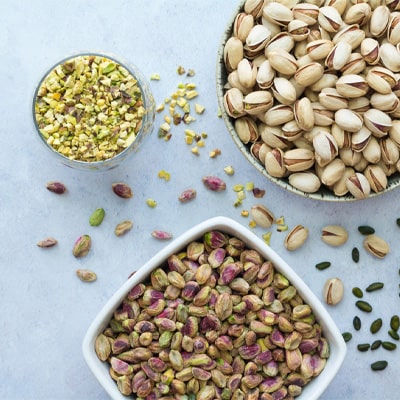
Pistachio
View Products

Frozen Drieds
View Products

Dried Vegetables
View Products

Raisin
View Products

Dates
View Products

Dried Apricot
View Products

Figs
View Products

Saffron
View Products

Powders
View Products

Dried Fruits
View Products
View Products
View Products
View Products
View Products
View Products
View Products
View Products
View Products
View Products
View Products

Start with EXW cost (farm-gate + sorting + initial packaging).
Add export processing fees (inspection, fumigation, phytosanitary, documentation).
Include inland transport + port charges to reach FOB.
Add sea freight + marine insurance to calculate CIF.
Add destination charges (import duty, local handling, clearance).
Consider buyer terms (credit, volume discounts, FX risk).
Add your profit margin to reach the final export offer.

Demand for dates in India and Pakistan is strong, especially around religious and festive seasons. Their proximity to Iran helps lower logistics costs. Yet exporters must overcome import duty regimes, local competition, and pricing sensitivity.
A well-structured pricing strategy can win margins while preserving competitiveness. The takeaway: knowing cost drivers, tariff differences, and negotiation levers gives you a clear edge when quoting for these markets.
Rabbi dates are semi-dry, less sticky than softer varieties, and more durable in transit. They are chiefly grown in Iran’s Sistan and Baluchestan region (Zabol, Iranshahr, Saravan).
Their moisture level and defect rate influence grading costs. Farm-gate harvesting, sorting, fumigation, packaging, and export compliance all add to base cost. Because Rabbi dates can stand ambient transport for longer, the premium for cold chain is lower, but quality controls remain essential.
According to Tari Trading data, the wholesale price of Rabbi dates in Iran ranged between USD 1,350 and USD 1,590 per ton, a baseline that helps position this variety among others such as Sayer Dates that often appear in export discussions.
Begin with the packing-house cost. This stage is even more critical for sensitive varieties like Mazafati (Kimia) Dates, where handling and moisture management influence the EXW figure.
Include all compliance-related costs. The importance of these steps becomes clearer when looking at industrial applications of different date varieties, as explored in the industrial Sayer Dates analysis for European markets.
Calculate inland transport, loading, and terminal handling. Understanding these cost layers aligns with broader market analysis found in studies of leading export destinations for Iranian dates.
Freight to India and Pakistan differs significantly. These shifts in price formation resemble changes tracked in market updates such as the current Mazafati dates export price reports.
In India, duty structure and related costs may be higher or more complex than in Pakistan. Be sure to factor customs broker, inspection, and possible regulatory delays.
Add your target margin and consider volume tiers or discounts for large consignments. If you accept deferred payment (LC, T/T 30/60), you may need a buffer for currency risk.
A summary cost table comparing India vs Pakistan side by side is useful to show landed costs and margin sensitivity.
Tariffs in India tend to be more rigid, with stricter import red tape. Pakistan may have more favorable trade routes (via Gwadar or Karachi) and lower port handling costs. Payment norms differ: Indian buyers often push for credit terms, increasing exposure to foreign exchange risk.
Also, competition in India is fiercer — many dates are already imported from Gulf markets, so your pricing must be sharper or differentiated (premium quality, packaging).
Test how your margin shifts when freight rises by 10 percent or duty changes by 5 percent. For example, a USD 100/ton freight rise might erode 1–2 percent margin, so your initial buffer must absorb that.
Use quality guarantees, third-party inspection, or escrow to justify premium pricing. Offer sample shipments, small initial lots, and staggered delivery to reduce buyer risk.
For Karachi, sea freight and import duty may be lower (say +100 USD/ton freight, +30 USD duty) so your margin could expand or price offer be more aggressive.
Build your pricing in a spreadsheet so you can vary parameters (freight, duty, margin) and see immediate impacts.
Engage a local customs broker in both countries to validate duty and clearance assumptions. Ensure documents and certifications are ready. Monitor competitor pricing in local wholesale markets. Update your model when exchange rates or shipping rates change.
Given the Iranian wholesale baseline of USD 1,350–1,590/ton, a competitive FOB price may fall between USD 1,400 and USD 1,700/ton depending on grade, location, and export costs.
Start from your FOB price, add sea freight, marine insurance, import duty, port charges, unloading and inland transport to destination warehouse.
Duty structures vary dynamically, but India often imposes stricter tariffs and higher clearing charges; Pakistan generally offers somewhat lower import duty for agricultural imports. Always check timely local tariff schedules